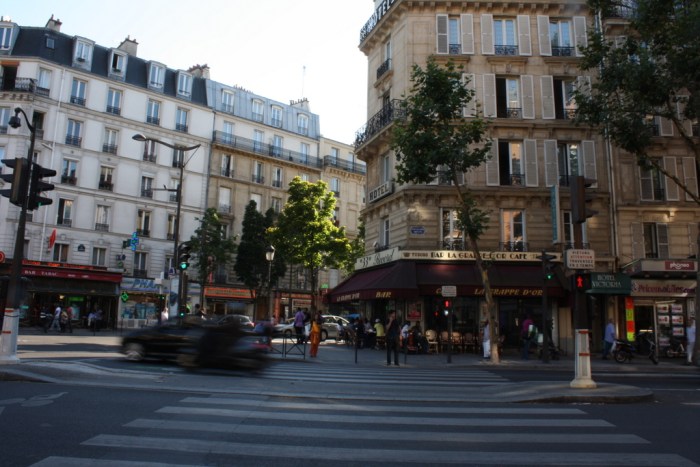
Beaubourg 17 Aug 2012


HSBC is Too Profitable to Prosecute
I fear the most recent grotesque example of US hypocrisy is getting swept under the rug, so I want to take a moment to try and grasp what it all means.
It was revealed last week that HSBC, one of the world’s largest banks, has been involved in a number of criminal acts over recent years. These crimes have mainly involved laundering billions of dollars for Mexican drug cartels and groups linked to Al Qaeda. There was even evidence that senior bank officials were in on the whole thing.
What was the outcome of this unveiling of such blatant crimes? HSBC was asked to pay a fine (of minimal proportions in comparison to its profits), and received NO CRIMINAL PENALTY.
I won’t go into the disastrous effects of the international drug trade, and I’m probably not the right person to do such a thing, but it’s safe to say that the drug trade fuels violence, poverty, gang activity, and a multitude of other detrimental phenomena in many countries. Yet it seems the US’ main approach to dealing with drug crime is to throw average American citizens in jail for possession of drugs like marijuana, an approach that disproportionately targets minorities and the poor. And when HSBC is found to be guilty of crimes that surely play a much bigger role in fueling the international drug trade than my neighbor smoking a joint that one time, not a single person is prosecuted.
Even moreso than the drug trade, the US government repeatedly presents terrorism as one of the greatest threats to the United States. Accordingly, the US regularly detains people all over the world, illegally, with no charge, where they may be held for undefined periods of time and subject to cruel and inhumane treatment. This even applies to US citizens, though the chances of this happening to you are substantially higher if you are brown or Muslim. Yet when one of the largest financial institutions in the world is found to be moving money for potential terrorist groups, to the tune of billions of dollars, it gets away with barely a slap on the wrist.
Not a single person at HSBC was jailed or penalized for their actions. The reasoning? HSBC is too big, and too important, to be prosecuted. (A nice extension of 2008’s tagline, “too big to fail.”) Meaningfully prosecuting HSBC, it is argued, could undermine the entire banking system!
I think it’s quite clear who is really in power here. The US government, or should I say the corporate interests that essentially run it, do not care about the rights of US citizens or the human rights of internationals. The ruling elite is interested in protecting one right only, and that is the right of that elite to continue pursuing profit at whatever cost.
Obviously, Glenn Greenwald explains it better than I do: http://www.guardian.co.uk/commentisfree/2012/dec/12/hsbc-prosecution-fine-money-laundering
Matt Taibbi with further thoughts: http://www.democracynow.org/2012/12/13/matt_taibbi_after_laundering_800_million
Belleville – La Chapelle 16 Aug 2012


Belmondo in Brasilia
“Vocês vão ver os palácios de Brasília, deles podem gostar ou não, mas nunca dizer terem visto antes coisa parecida.” -Oscar Niemeyer, architect of Brasilia, who died yesterday at the age of 104.
Clip from L’Homme de Rio, 1964.
Little Boxes
According to Israeli human rights group B’Tselem,* there are about 124 Israeli settlements in the occupied West Bank. In addition to this are around 100 informal “outposts.” All settlements are deemed illegal under international law, including all outposts, though unlike settlements, most outposts are not officially sanctioned by the Israeli government (key word: “officially”). There are many incentives for Israelis to move to settlements: though some move because they feel they are fulfilling a religious or nationalistic destiny, others are given financial incentives either directly by government bodies or because they simply cannot afford to live in cities like Tel Aviv or Jerusalem.
You can see settlements peppered throughout the West Bank (which is presumed to be under control of the Palestinian Authority, though you can see this is clearly not the case) on this map. The following pictures were all taken in the mid and northern West Bank, near Ramallah and up toward the Palestinian town of Nablus.
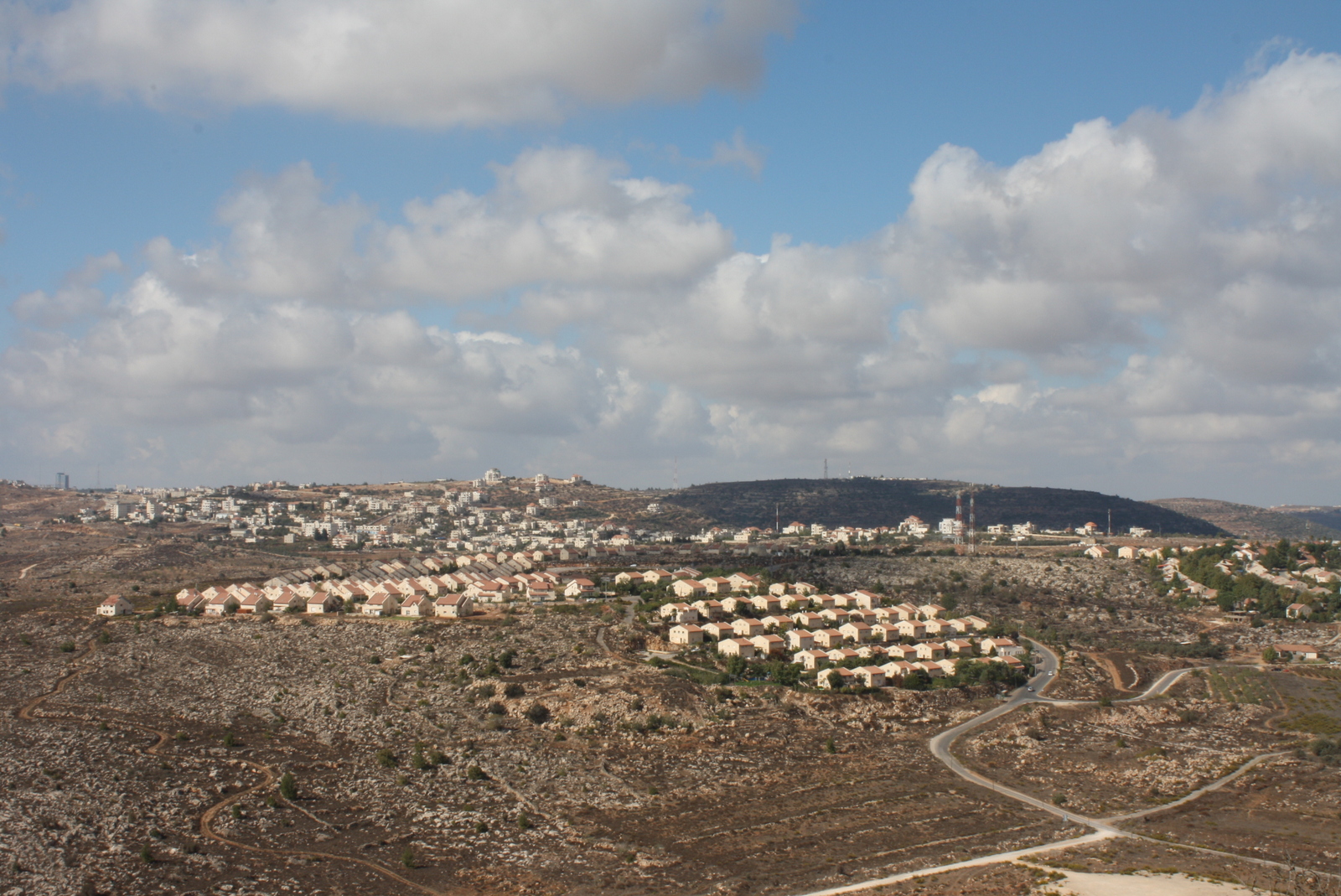
The settlement of Ofra, not too far north of Ramallah. Not all settlement houses look like carbon copies of each other, but these are particularly neat and uniform.

A nearby lookout point with views of the area. This sign is supposed to roughly show the location of nearby settlements. The text at the bottom asks, “Can you see the holy temple?” referring to the third and final temple that should theoretically, under Judaism, be built on the present-day Temple Mount in Jerusalem. Just behind the sign, you can see the informal caravans and structures that form the outpost called Amona.

Inside Ofra. The neat carbon-copy houses up close. I felt I could be in any number of suburban neighborhoods in the US. The streets were eerily quiet but for the occasional car or child on a bicycle.

A sign for the settlement of Kfar Tapuach (literally, “Appleville”), just south of Nablus. Fruit seems to be a recurring symbol on this day, as in one settlement, an over-sized grape statue graced a small roundabout near the entrance gate.

Kabir (“big” in arabic) Mountain
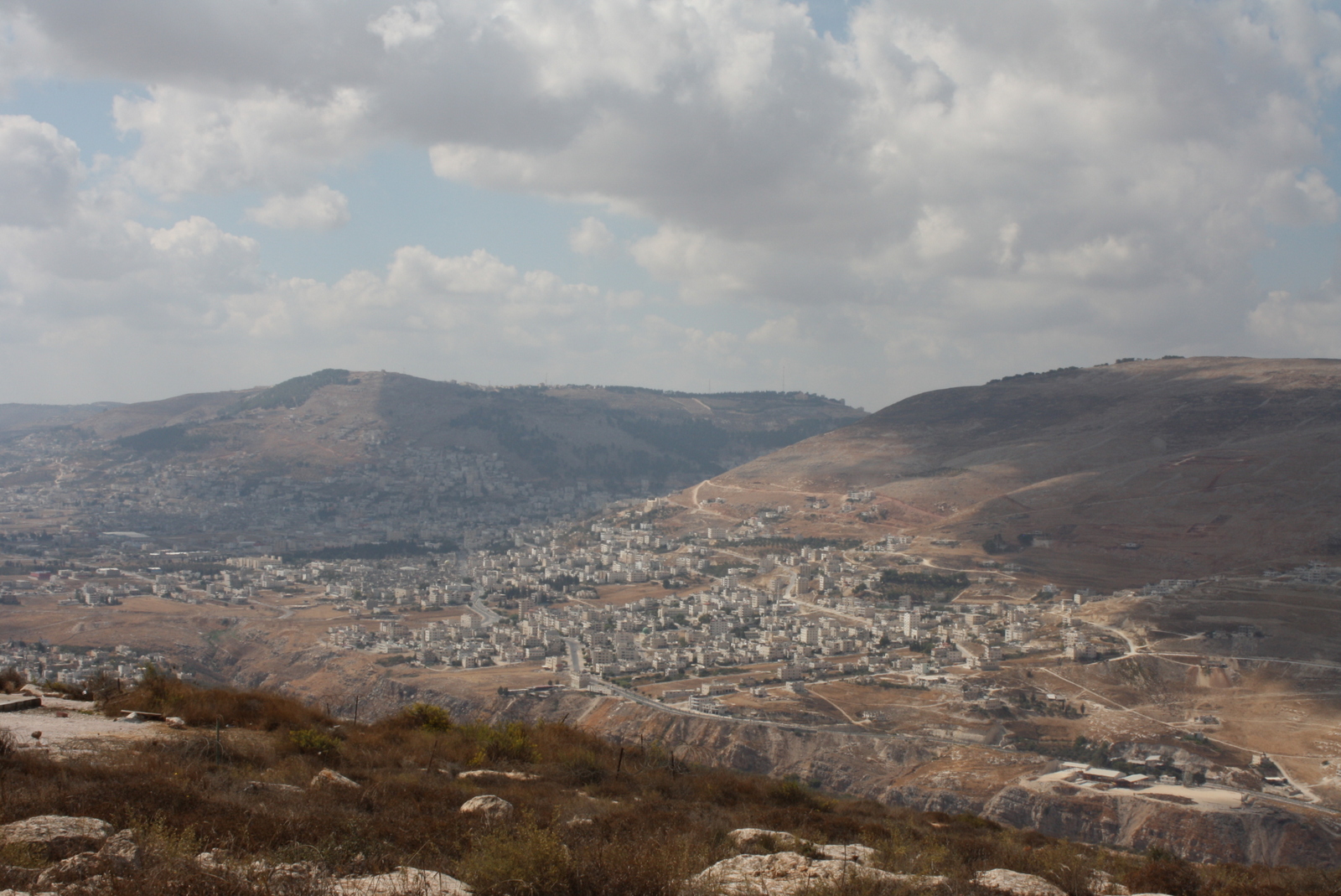
Palestinian village on the outskirts of Nablus.
West Bank: Access and Closure Map
The following map, updated yearly by the UN Office for the Coordination of Humanitarian Affairs (OCHA) is ubiquitous among West Bank NGOs. The map, one of the few detailed ones in existence, shows various movement and access restrictions throughout the Palestinian territory: settlements, checkpoints, Israeli-only roads, the construction of the Separation Wall, etc. Purplish blobs are Israeli settlements, and are visibly peppered throughout. Perhaps most striking are the colors signifying Areas A, B, and C–the three zones established under the Oslo Accords. Area A is under full Palestinian control, Area C is under full Israeli control, and Area B is a mixture of both. Area C (shown on this map in white) comprises approximately 60% of the West Bank. Looking at this map, the total encircling of Palestinian areas (in yellow) is very apparent.

(Or download the 2011 version here.)
“City as Art”
A film by Aliyar Rasti
The city is man’s most consistent and on the whole, his most successful attempt to remake the world he lives in more after his heart’s desire. But, if the city is the world which man created, it is the world in which he is henceforth condemned to live. Thus, indirectly, and without any clear sense of the nature of his task, in making the city man has remade himself.
Robert Park, On Social Control and Collective Behavior, 1967.
18° Arrondissement 24 July 2012



 CITIES LIKE DREAMS